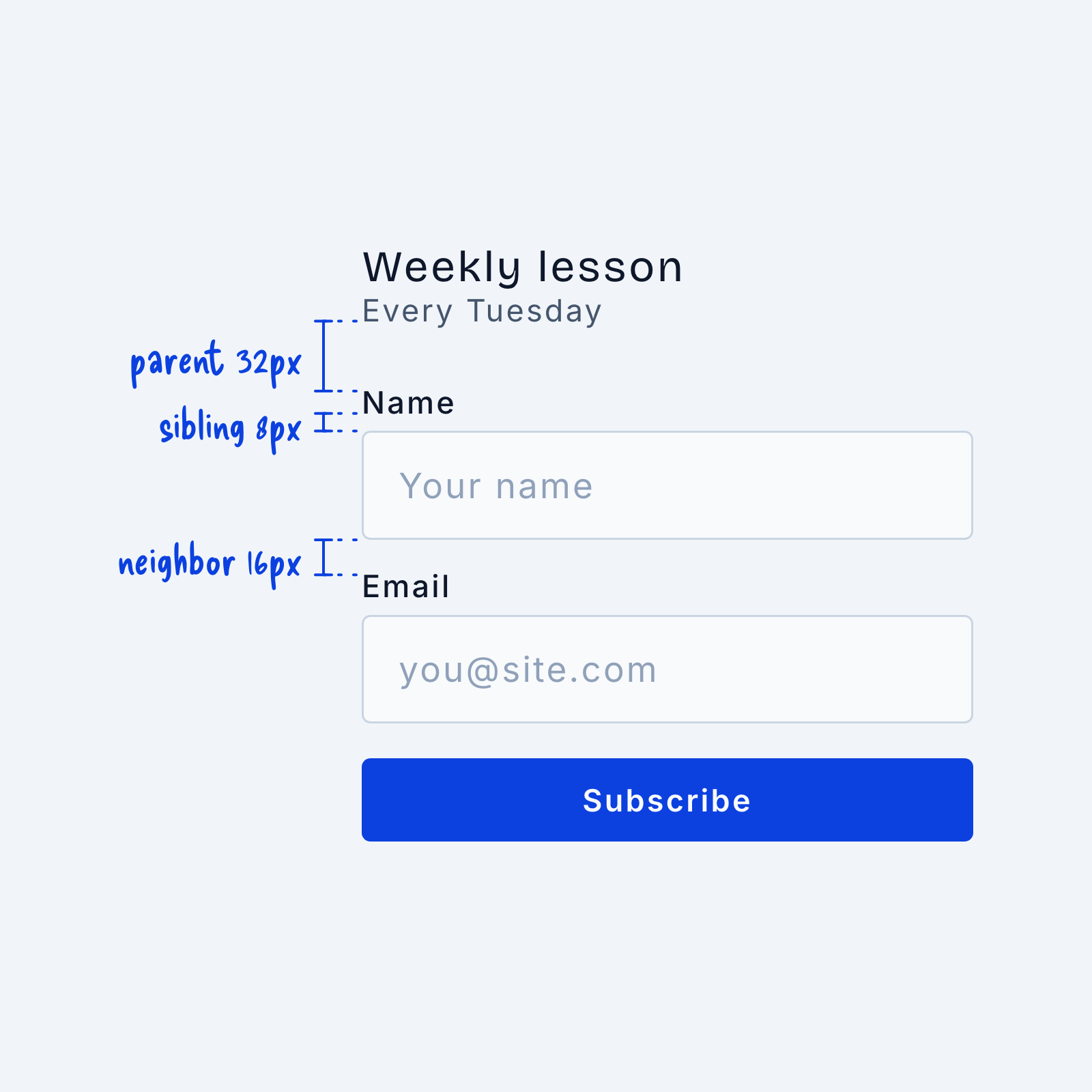
When you design a website, the spacing between two elements tells the visitor how closely related they are to one another. For example, a form field and its label should be spaced close together. Two columns in a section might be spaced farther apart.
Because of this, it’s often useful to create “relational spacing rules” for your design. Instead of only using utility classes like gap-small, it can be helpful to map those classes onto certain relationships, like “siblings,” “neighbors,” or “parents.” This keeps the spacing of your design consistent across sections and pages. If two pairs of elements are related in the same way, they should have the same spacing. For example, two buttons in a call to action might have the same spacing as a form field and its button. Two cards might have the same spacing as a headline and a paragraph.
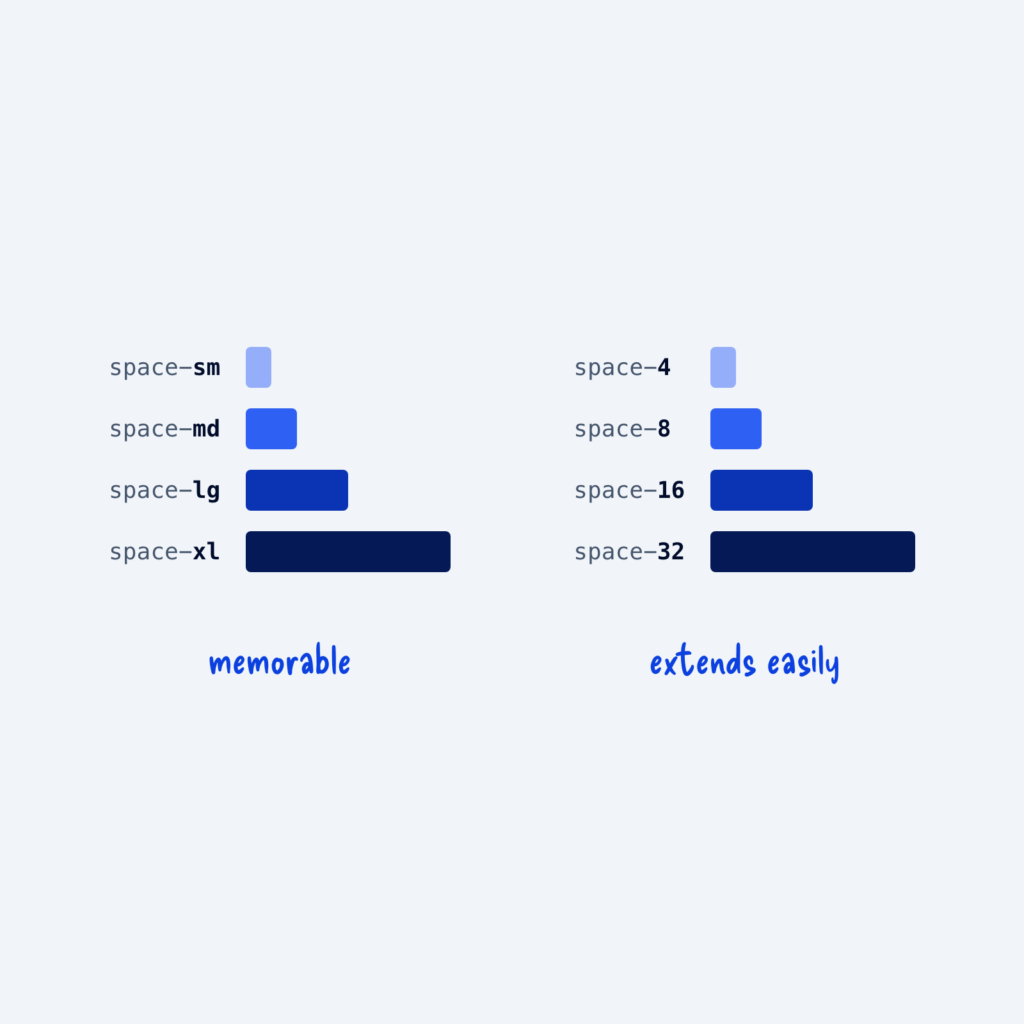
By giving these relationships semantic names, we make it easier to keep our spacing system consistent. Of course, we don’t have to use names like sibling, neighbor, parent, etc. We can also use a more conventional and scalable naming method like spacing-1, spacing-2, etc. But the more meaningful the names are, the more likely we are to remember each relationship later.