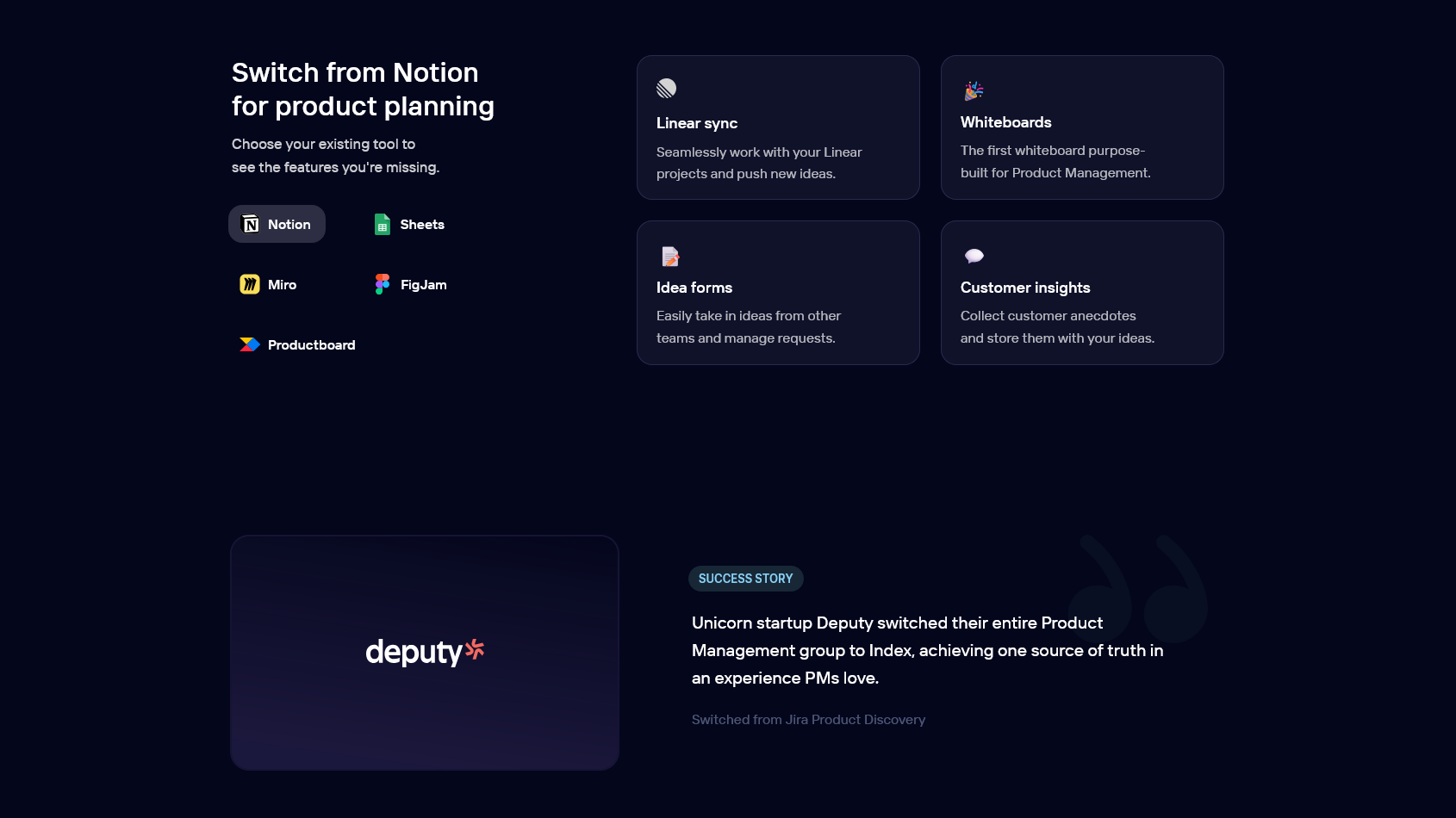
This is a comparison section for Index, a project management tool. This section shows visitors exactly what project management tools they’re missing in their current stack, and how Index picks up the slack for them. In this design lesson, we’re going to learn what makes this section so effective.
Section Breakdown
The first part of this section is a horizontal tab layout, also sometimes called a horizontal accordian. You can click each logo to the features you’re missing if you use that tool. Each feature, and their explanation is shown on the right. Below this is a success story of how a startup increased productivity by switching from Jira to Index. This subsection is highlighted with a blue chip labled “SUCCESS STORY”, to draw visual attention to it after you read through the features list.
Why It Works
1) Meet people where they are: If you’re managing projects, especially for early-stage startups, you likely use at least one of the products in this list. Index shows visitors the tools they’re already using and how these tools might be inferior to Index. Instead of just saying that Index syncs with Linear (a popular customer insights tool), they show visitors what they’re using now doesn’t. They meet visitors where they are so they can show them the value of their product.
2) Turn frustration to ease: If you’re looking for a serious product management tool, you’ve likely hit a wall with these other options. After all, Notion, Sheets, Miro, and FigJam are not designed specifically for project management, but rather as general creative or database tools. However, visitors don’t want to lose the features of these tools either, they’d just like more. This is where Index comes in, to position your current stack as a stepping-stone, with Index as the final destination.
3) Tie it to success: Visitors are always doubting. When those doubts are answered, trust increases and people buy. The doubt visitors have in their minds before switching to a new tool is always, “will it really work?”. So it’s no accident that they show a successful company switching from Jira to Index right underneath this comparison section. They want to tie the thought of leaving your current stack to success, not doubt.
Key Takeaway
Get specific about what makes you better. If there’s a feature you offer, a way of doing business that’s unique, an offer that’s unbeatable, then contrast that with the competition. Sometimes you can frame how Index does, from novice tool to professional tool. If you sell something down market, you can emphasize value for price. If you sell to a smaller number of customers, you can emphasize personal relationships and quality service. This frames your business as better in some aspect than a competitor. This attracts visitors who share your same values (professionalism, value, personal relationships, etc.), making them more likely to buy from you.